
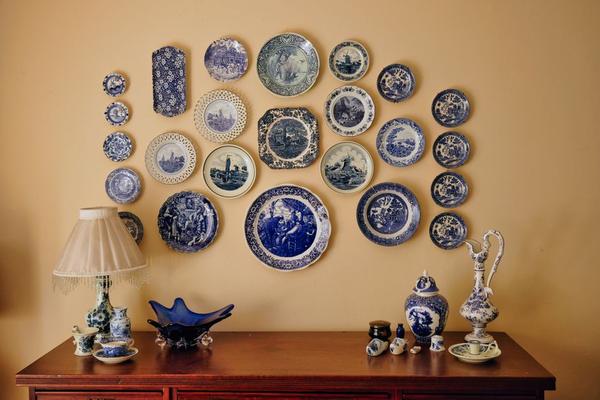
Homes in 2026 are moving away from rooms that look perfectly coordinated or staged for a photograph. The stronger direction is personal: spaces that reveal where someone has been, what they value, and what they have chosen to keep. Curating personal collections as home decor gives those objects a deliberate place.
A collection might include travel ceramics, inherited books, framed tickets, vintage cameras, records, baskets, artwork, family photographs, or ordinary tools with beautiful forms. The goal is not a museum, but collected interiors where memory and visual order work together.
Start With the Story, Not the Shelf
Intentional collections begin with a connection. It may be visual, such as blue-and-white ceramics, or emotional, such as objects gathered from different trips. That shared story becomes your editing principle and helps decide what belongs together.
Choose the pieces that carry the most meaning
You need not display everything. Select objects that are visually interesting, emotionally important, or useful in the room. A smaller group of strong pieces usually says more than a crowded surface where nothing has room to register.
Place the full collection on a table or floor before styling it. Remove duplicates, damaged items you do not love, and pieces that weaken the story. Keep favourites out and store the rest for rotation. This edit is one of the most effective forms of personal decor styling.
Notice natural sub-groups
Large collections become easier to live with when divided into smaller families. Sort by material, colour, era, size, origin, or use. A record collection might stay together while a few beautiful covers are framed nearby. Travel objects can be arranged by destination instead of scattered randomly.
Create Cohesion Without Making Everything Match
Meaningful home decor should feel connected, not uniform. Repetition helps the eye understand a display, but too much matching can make personal objects look like merchandise. Use a few visual rules, then allow the collection to provide variation.
- Repeat one element. Use a recurring frame finish, tray material, shelf colour, or background tone to connect unlike objects.
- Vary height. Combine low, medium, and tall pieces so the arrangement has a readable silhouette.
- Leave breathing room. Empty space around a treasured object makes it easier to notice.
- Mix textures carefully. Glass, worn wood, metal, paper, and textile can coexist when one or two colours link them.
- Use odd groupings loosely. Groups of three or five often feel relaxed, but scale matters more than a fixed formula.
A guide to how to style shelves is a natural next step because shelves are where spacing, height, and visual rhythm become especially important.
Match the Display Method to the Collection
Small objects need boundaries
Miniatures, stones, matchbooks, jewellery, or found objects can read as clutter when spread across several surfaces. Give them a defined zone: a shallow tray, glass-front cabinet, printer’s drawer, shadow box, or single shelf. A boundary tells the eye that the objects belong together.
Books and paper benefit from layers
Keep most books upright, then use a few horizontal stacks to raise smaller objects. Postcards, maps, letters, and ticket stubs can be framed in groups rather than pinned everywhere. For valuable paper, avoid prolonged direct sunlight and damp areas, which can accelerate fading and deterioration.
Art and textiles can shape a room
A collected wall does not need identical frames. It needs consistent spacing and a clear boundary. Lay frames on the floor first, establish the outside shape, and fill inward. Small textiles or woven pieces add softness and texture. If you enjoy blending eras, mixing vintage and modern decor can help a collection feel integrated rather than themed.
Useful collections deserve to stay useful
Wooden spoons in a crock, cutting boards leaning against a backsplash, hats on wall hooks, or colourful glassware in an open cabinet can create character while remaining practical. Display only what can tolerate the room’s light, heat, moisture, and daily handling.
A Practical Example: Turning Mixed Keepsakes Into One Display
Imagine you have six inherited ceramic pieces, three travel objects, and two framed family photographs. Displayed separately around the living room, they may feel unrelated. Instead, choose one console table and create a single story about family and place.
Start with the tallest ceramic piece near one side and balance it with a framed photograph on the other. Place two smaller ceramics between them and use a shallow tray for the travel objects. Keep one photo slightly behind the tray for depth, and leave part of the console empty. Move the remaining ceramics to a nearby bookcase, repeating the main display’s colour.
This works because it creates relationships through proximity, scale, and repetition without forcing every object to match. If the room feels busy, choosing a cohesive colour palette can help you decide which background and accessory colours should stay quiet.
Rotate Collections Instead of Expanding Every Display
One of the best ways to keep collected interiors fresh is to rotate them. Store part of a collection safely and change the display seasonally or when the room starts to feel stale. Rotation also gives fragile or light-sensitive pieces a break from constant exposure.
Avoid the Mistakes That Make Collections Feel Like Clutter
The most common problem is giving every object equal visual importance. When everything is displayed at once, there is no focal point. Spreading a collection across too many rooms can weaken its impact, so keep related pieces close enough to read as a group.
Resist buying filler simply to make a collection larger. A meaningful collection gains character through time, memory, use, or genuine curiosity. Generic objects chosen only because they fit a colour scheme can dilute what made the display personal.
FAQ
How do I display a personal collection without making my home look cluttered?
Limit the display area, edit the number of pieces, vary height, and leave visible empty space. Trays, cabinets, shelves, and framed groupings create boundaries that make collections look intentional.
Should all items in a collection match?
No. A collection usually feels richer when pieces vary. Create cohesion with one repeated feature, such as material, frame style, colour, subject, or origin, rather than making every object identical.
What is the best way to display sentimental items?
Choose pieces that can safely be shown and place them where you will actually see them. Fragile paper, photographs, textiles, and delicate objects may need protection from strong sunlight, moisture, heat, or frequent handling.
Can I mix several different collections in one room?
Yes, but give each collection its own zone and let the room share a few common visual elements. Repeated colours, materials, or frame finishes can connect separate groups without creating one crowded display.
Let the Collection Evolve With the Home
The most memorable rooms rarely look finished in a single weekend. They grow through use, travel, inheritance, hobbies, and changing taste. Curating personal collections as home decor works best when styling remains an ongoing edit rather than a final arrangement.
Keep the objects that still tell a story, give them enough space to be seen, and allow the display to change as your life does. The result is a home with visual character that could not have been assembled from a catalogue because its meaning belongs specifically to you.