
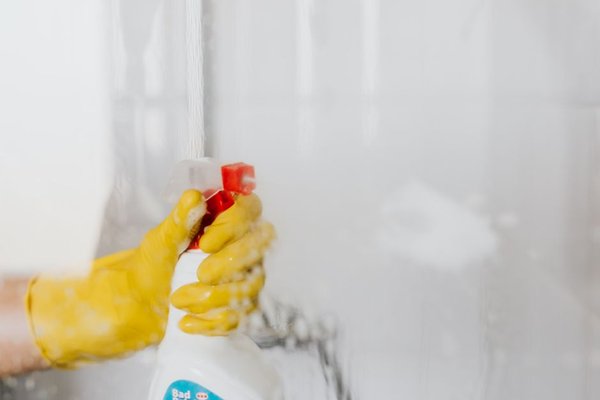
That cloudy stripe on a shower door often returns just days after you clean it. The same stubborn film collects around bathtub rims, on tile, and beneath taps, making an otherwise tidy bathroom look dull. Fortunately, removing soap scum usually requires more patience and the right cleaner, not harder scrubbing. The trick is to identify what you are cleaning before reaching for a bottle.
What Causes Soap Scum?
Traditional bar soap contains fatty ingredients that react with calcium and magnesium in hard water. The resulting residue sticks to bathroom surfaces, often trapping body oils and dirt along the way. Shower soap buildup can feel waxy or slightly greasy, especially on glass and tile.
Not every white mark is soap scum. Hard-water deposits are more mineral-rich and may feel rough or chalky. A bathroom can have both at once. Begin with a gentle cleaner that lifts oily residue; if a chalky layer remains, choose a product suitable for mineral deposits and the specific surface.
How to Remove Soap Scum: The Basic Method
For most washable, nonporous bathroom surfaces, start with warm water, a little mild dishwashing liquid, and a soft microfiber cloth. This is a sensible first attempt before using a stronger soap scum remover.
Loosen the Film Before Wiping
Rinse the surface with warm water to soften residue. Apply a small amount of dishwashing liquid diluted in warm water, then spread it across the affected area with a soft cloth or non-scratch sponge. Give it a few minutes to work, keeping the area damp rather than letting the cleaner dry.
Wipe gently, rinse thoroughly with clean water, and dry with another microfiber cloth. Repeat once if needed. On stubborn patches, a bathroom cleaner specifically labelled for soap scum may work better. Follow its contact time, surface restrictions, and rinsing instructions exactly.
For a practical example, consider a shower door with a cloudy band at shoulder height. Treat a small square first, wipe it dry, and compare it with the surrounding glass. If the test square becomes clear, continue in sections. If it stays cloudy, the problem may include hard-water scale or glass damage rather than soap residue alone.
Choose the Right Method for Each Bathroom Surface
Glass Shower Doors
On ordinary uncoated glass, mild detergent and a microfiber cloth often lift fresh film without scratching. Work from top to bottom so dirty water does not run over cleaned areas. Rinse and use a squeegee before buffing dry.
Check the manufacturer’s guidance before applying vinegar, acidic descalers, abrasive pastes, or specialist glass products. Some shower doors have protective coatings that require particular cleaners. Never assume a product is safe simply because the underlying material is glass. A regular routine for cleaning glass shower doors can also reduce repeat buildup.
Ceramic and Porcelain Tile
Glazed ceramic or porcelain usually tolerates mild detergent and a soft cloth well. Focus on corners, shelves, and lower wall sections where water repeatedly runs. Use a soft-bristled brush around grout lines, without digging into or scouring the joints.
Acidic products can affect some grout, sealers, and nearby trim. Check product instructions and keep cleaning solutions away from damaged or unsealed joints. Rinse the tile and grout thoroughly, then dry the area so residue is not left behind.
Bathtubs and Shower Trays
Tub soap scum tends to build up at the waterline, around the drain, and where bottles sit. Acrylic and fiberglass finishes can scratch or become dull under abrasive pads. Use a manufacturer-approved nonabrasive cleaner and a soft sponge, letting the cleaner loosen the film before wiping.
Chrome Taps and Other Fixtures
Soap residue gathers around tap bases, handles, and shower fittings. Wipe with mild soapy water and a soft cloth, rinse, and dry immediately. Do not leave concentrated cleaners sitting on plated metal or decorative finishes, as they may discolour or damage the surface.
Marble, Travertine, and Natural Stone
Natural stone needs a different approach. Vinegar, lemon juice, and acidic bathroom cleaners can etch marble, limestone, and travertine, leaving dull marks that ordinary cleaning will not fix. Choose a pH-neutral stone cleaner or a non-acidic soap scum remover expressly approved for your stone and sealer.
Use a soft cloth, rinse with clean water, and dry carefully. For persistent residue, seek advice from the stone supplier rather than experimenting with abrasive powders or household acids.
What If the Cloudy Film Will Not Budge?
Before scrubbing harder, check whether you are dealing with two problems. A greasy film that improves after detergent is likely to contain soap residue. A rough, chalky deposit left behind may be limescale. Treating these as separate layers is often more effective than applying several products together.
Never combine cleaning chemicals. In particular, do not mix bleach with vinegar, ammonia, or other cleaners; dangerous fumes can result. Ventilate the room, wear gloves when directed, and thoroughly rinse away one product before considering another. If a glass surface remains permanently hazy after appropriate cleaning, scratching or etching may be responsible.
How to Stop Soap Scum Coming Back So Quickly
The easiest bathroom cleaning schedule starts immediately after the shower. Run a squeegee over glass and smooth walls, then wipe the ledges where water collects. This takes much less effort than removing a thick film later.
Once a week, wash high-contact areas with a compatible mild cleaner and rinse well. Keep bottles off surfaces where possible, and wash soap dishes that collect sticky residue. A quick bathtub cleaning routine helps prevent a ring from hardening around the sides.
Frequently Asked Questions
What is the easiest way to remove soap scum?
Start with warm water, diluted mild dishwashing liquid, and a soft microfiber cloth. Let the cleaner sit briefly, wipe without aggressive scrubbing, rinse, and dry. Choose a surface-approved soap scum remover if that does not work.
Does vinegar remove soap scum?
Vinegar can help with certain mineral deposits, but it is not suitable for every bathroom finish. Avoid it on acid-sensitive natural stone and check the care instructions for grout, coated glass, and metal fixtures before considering an acidic cleaner.
Can baking soda scratch a shower or bathtub?
Even a familiar household powder can be abrasive, particularly on acrylic, glossy coatings, or delicate finishes. Avoid scrubbing with powders unless the surface manufacturer specifically allows them.
How often should I clean shower soap buildup?
A quick rinse and squeegee after use, paired with a gentle weekly clean, is a good starting point. Increase the frequency if several people use the shower or residue returns quickly.
Keep the Finish, Lose the Film
To remove soap scum without damaging your bathroom, match the cleaner to the material, allow time for it to loosen buildup, and rinse it away completely. Glass, tile, tubs, fixtures, and natural stone should not all receive the same treatment. A few small drying habits between cleanings will make the next job noticeably easier.