
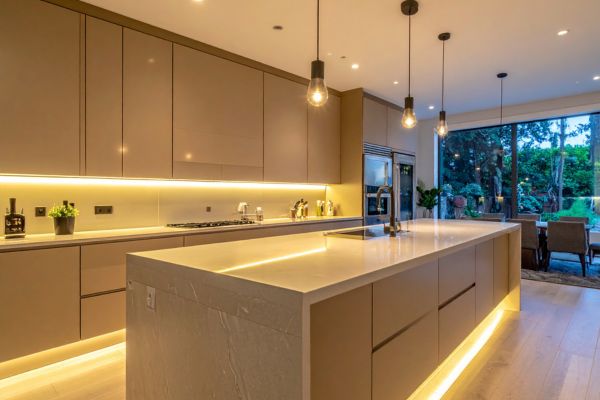
The kitchen has quietly become one of the most lived-in rooms in modern homes. It’s no longer just a place for cooking dinner or making morning coffee. People gather there after long days, lean against countertops during conversations, help children with homework under pendant lights, and linger around islands long after meals are finished.
Because of that shift, lighting matters more than ever.
Good kitchen lighting does far more than illuminate a room. It shapes mood, influences comfort, improves functionality, and changes how materials and colors feel throughout the day. A poorly lit kitchen can seem cold or cramped, even when the design itself is beautiful. On the other hand, thoughtful lighting can make a modest kitchen feel warm, open, and welcoming.
The best kitchen lighting ideas for modern homes often blend practicality with atmosphere. They don’t rely on a single bright ceiling fixture anymore. Instead, modern kitchens tend to layer different types of lighting together, creating spaces that feel adaptable and lived-in rather than overly polished.
That balance is what makes kitchen lighting such an interesting part of interior design.
Why Layered Lighting Works Better Than One Central Fixture
For years, many kitchens relied almost entirely on one overhead light in the center of the ceiling. It technically brightened the room, but it rarely created a comfortable environment.
Modern kitchen design approaches lighting differently.
Layered lighting combines multiple light sources with different purposes. Ambient lighting provides overall brightness, task lighting helps with specific activities like chopping or cooking, and accent lighting adds depth or visual interest.
The result feels more natural.
Under-cabinet lights might brighten countertops without casting harsh shadows. Pendant lights above an island can create a softer gathering space while recessed ceiling lights maintain general visibility throughout the room.
This layering also allows the kitchen to shift moods throughout the day. Bright functional lighting may work well in the morning, while warmer, softer illumination often feels better in the evening.
A kitchen that can adapt to different moments tends to feel more comfortable over time.
Pendant Lights Continue to Shape Modern Kitchens
Pendant lighting remains one of the most popular choices in contemporary kitchens, and it’s not difficult to see why.
Pendant fixtures naturally draw attention without overwhelming the space. Hung above islands or dining areas, they create visual anchors that help define different zones within open-concept layouts.
What’s interesting is how much pendant styles have evolved. Minimal matte black fixtures, oversized glass globes, industrial metal designs, and sculptural organic shapes all appear in modern kitchens now. Some homeowners choose symmetry with matching pendants, while others lean toward slightly mismatched designs that feel more relaxed and personal.
Scale matters more than people sometimes realize.
Tiny pendants above a large island can feel visually lost, while oversized fixtures in smaller kitchens may dominate the room too aggressively. The most successful lighting setups often feel balanced rather than perfectly coordinated.
There’s also something quietly social about pendant lighting. It tends to pull people toward kitchen islands almost instinctively, making those areas feel more inviting.
Under-Cabinet Lighting Changes Everyday Functionality
One of the simplest yet most effective kitchen lighting ideas for modern homes involves under-cabinet lighting.
It’s not flashy, but it makes a noticeable difference.
Without task lighting, countertops often end up partially shadowed because ceiling lights are positioned behind the person working. Under-cabinet lights solve that problem directly by illuminating the workspace itself.
The practical benefits are obvious while cooking, but the effect goes beyond functionality. Soft lighting beneath cabinets creates depth and warmth, especially in kitchens with darker finishes or limited natural light.
LED strip lighting has become particularly popular because it provides even illumination without visible hot spots. Many systems now allow adjustable brightness or color temperature changes, making it easier to shift between cooler daytime lighting and warmer evening tones.
At night, under-cabinet lighting can sometimes replace overhead lights entirely, creating a calmer atmosphere that feels surprisingly relaxing.
Natural Light Still Matters More Than Technology
No matter how advanced lighting systems become, natural light continues to shape how kitchens feel more than almost anything else.
Morning sunlight spilling across countertops changes the mood of a kitchen instantly. Even on cloudy days, natural daylight tends to make spaces feel more open and alive compared to purely artificial lighting.
Modern kitchen design increasingly focuses on maximizing that connection.
Large windows, skylights, glass doors, and reflective surfaces all help distribute daylight more effectively throughout the room. In some kitchens, lighting design actually becomes less about adding brightness and more about supporting natural light during darker hours.
The interaction between daylight and artificial lighting matters too. Warm-toned fixtures often complement evening transitions better, while overly cool lighting can feel sterile once the sun goes down.
A kitchen that feels beautiful at noon but harsh at night usually needs more thoughtful layering and temperature balance.
Recessed Lighting Creates a Cleaner Look
Recessed lighting has become almost standard in many modern kitchens because of its simplicity and versatility.
Unlike hanging fixtures, recessed lights disappear visually into the ceiling. That clean appearance works especially well in minimalist or contemporary interiors where clutter is intentionally reduced.
But placement matters.
Too many recessed lights can make a kitchen feel overly bright and flat, almost like a retail space. Too few create uneven lighting and dark corners. The goal is usually balance rather than maximum brightness.
Spacing should support how the kitchen is actually used. Work areas need stronger illumination, while dining spaces often benefit from softer light levels.
Dimmers play a major role here. A kitchen that operates at full brightness all the time can feel exhausting. Adjustable lighting allows the space to shift naturally between practical daytime use and quieter evening settings.
That flexibility is one reason recessed lighting continues to remain popular despite changing design trends.
Warm Light Versus Cool Light in Kitchen Spaces
Color temperature changes how kitchens feel emotionally, even when people don’t consciously notice it.
Cool white lighting tends to feel crisp and modern. It can make kitchens appear brighter and cleaner, which explains why it’s common in highly contemporary spaces. However, if overused, cool lighting sometimes creates a clinical atmosphere that feels slightly impersonal.
Warm lighting creates a softer and more inviting environment. It tends to flatter wood finishes, natural stone, and warmer paint colors more effectively.
Most modern kitchens benefit from a mix rather than a strict commitment to one tone. Task areas may use slightly cooler lighting for visibility, while dining or seating areas lean warmer for comfort.
This balance often makes kitchens feel more natural because the lighting shifts subtly depending on the time of day and activity taking place.
People rarely describe great kitchen lighting in technical terms. Usually, they simply say the room “feels good.” Color temperature is often a big part of that feeling.
Statement Fixtures Are Becoming More Common
In many modern homes, kitchens are no longer hidden functional rooms separated from living spaces. Open layouts have made kitchens far more visible, which has increased interest in decorative lighting.
Statement fixtures are now common focal points.
Oversized chandeliers, sculptural pendants, mixed-metal designs, and artistic light installations are appearing in kitchens that previously might have relied entirely on practical fixtures.
What’s interesting is that these choices often reflect personality more than strict design rules. Some homeowners prefer clean geometric fixtures, while others gravitate toward vintage-inspired lighting that adds softness and character.
The trend suggests a broader shift in how kitchens are viewed. They’re no longer treated purely as workspaces. In many homes, they function almost like social lounges connected directly to cooking and dining areas.
Lighting naturally becomes part of that experience.
Smart Lighting Is Quietly Changing Kitchen Design
Smart home technology has started influencing kitchen lighting in subtle ways.
Voice-controlled systems, programmable lighting scenes, motion sensors, and app-based dimming allow homeowners to adjust kitchen environments quickly without relying on traditional switches alone.
Some systems automatically shift brightness levels based on time of day. Others allow separate lighting zones to operate independently.
While smart lighting can sound overly technical at first, many of its advantages are fairly simple in practice. Softer lighting in the early morning, brighter task lighting while cooking, and warmer evening settings can all happen automatically.
The technology itself often fades into the background once installed. What remains noticeable is the comfort and flexibility it creates.
Conclusion
The best kitchen lighting ideas for modern homes go beyond decoration or brightness alone. They shape how the space feels, functions, and adapts to everyday life.
Modern kitchens have become more layered and personal over time. They serve as gathering spaces, quiet morning retreats, workstations, and social hubs all within the same room. Lighting plays a major role in supporting those different moods and activities.
Pendant fixtures add focus and character. Under-cabinet lighting improves comfort and visibility. Recessed lighting creates flexibility, while natural daylight continues to influence the atmosphere more than any technology can fully replicate.
What makes kitchen lighting especially interesting is that small changes often have a surprisingly large impact. A warmer bulb, softer evening lighting, or better task illumination can completely shift the experience of a room people use every single day.
In the end, good kitchen lighting rarely calls attention to itself directly. Instead, it quietly makes the space feel more welcoming, functional, and alive.